Susie Strong

I wasn’t going to post this week. Then I heard about Susie Lindau’s latest Wild Ride.

The Big C. Cancer. And a double mastectomy. Taking place today.

Just a twist in the road, she says. And, somehow, finds a way to laugh

Susie is an inspiration – always cheerful, always welcoming. And I never cease to be in awe at how she does the things she does.

As fellow wild riders, Susie and I couldn’t be more different.

Where in snow I’d be hugging a fire and a mug of mulled wine, Susie is taking a plunge

Where I am dancing on the inside, Susie is getting down Gangnam Style

Where I am holding down the brakes, Susie is strutting her scars.

If I was going to pick someone to take the Universe on for me – I’d pick Susie, every time.

Whatever higher power is responsible for sending you this latest roadblock, Susie, with a spirit like yours, there’s only one thing to be said…

Can’t touch this.

Stay strong, Susie!
Our thoughts are with you.

Many thanks to Maria, aka brickhousechick, for reaching out across the globe to include Australia in the Susie Strong message.  Please head over to Susie’s blog and send her some positive vibes today.

Coming Down to Earth

I’m warning you now. This post is not pretty…

Before I went travelling, I took great delight in watching shows like Worlds Apart, where people from developed nations got to spend a week in a village somewhere on the opposite side of the earth and live how the “natives” do.

From the safety of my living room I would hee-haw at the spoilt white people. “Wimps!” I’d say, and wonder how they could be so horribly naive.

All my words were swallowed when, on a little Indonesian boat, I was introduced to the concept of…the squatting toilet.

Squat

“I’m not using that,” I whisper to Ms, and make a pledge to hold It til we make the two and a half hour journey to the national park. Surely they’ll have a sitting toilet there – it’s for tourists, after all…

When we got to the national park, I took off eagerly – bum bag firmly in place containing everything sanitary one could possibly imagine.

But I found, to my horror, a squatting toilet in a much less hygienic state than the one on the boat.

Until that day, I’d never before understood the point of doing squats.

Two days of squatting toilet later, I was lying in recovery on my ‘American spring bed‘ when suddenly I wailed…

“But whyyyyyy? I just don’t understand why, after this many years of evolution and advances in technology, anyone still uses a squatting toilet???”

Meanwhile, Ms (who grew up with squatting toilets) was doubled up in fits of hilarity at my expense.

When she finally recovered her composure, a lengthy discussion ensued.

I agreed I could understand how maybe the squatting toilet made sense in the days of sarongs and no underwear. “But everyone wears high heels and pants these days – it doesn’t make sense anymore!”

Squat Evolution

Then, after a long silence, “I suppose sitting where a hundred other bums have been is not hygienic either,” I muse, still unable to forget the pain in my thighs.

When I returned home, I did some research. And without going into graphic detail, scientific studies show that, in fact, squatting is a much healthier and more ergonomic way of doing business.

I don’t know. I’m not convinced. What about the splash back?

I remember the bemused look on our tour guide’s face, every time I trotted off to use the loo, and came back rubbing my hands with sanitising gel.

The moment I realised, with a stubborn kind of shame, that I am that white woman, after all…

What is it about western culture, and our need to be distanced from the dirt? It must look to others, perched as we are upon our thrones, like we think “our shit don’t stink”.

So I conclude – this is how they get us tourists back for going and messing up their formerly pristine shores.

It’s the locals way of bringing us back down to earth.

Has travel taught you any surprising home truths?

_______________________________________________________________

Since returning from travel, I’ve learned another home truth – I am not managing my work and online obligations very well.

Until I can get my priorities sorted out, I will be off social media, and reducing my posting frequency to fortnightly. Apologies to anyone feeling neglected – I hope to visit you soon.

Thanks to Averil Dean for reminding me that sometimes, us writers have to say ‘no’ to Candy.

Appeasing the Dragon

Between the shamelessly ‘touristy’ chapters of our holiday in Bali, Ms and I took a detour to a more remote part of Indonesia.

DSC00238

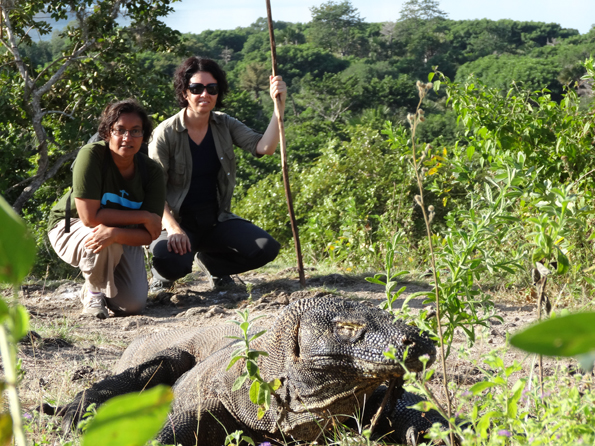
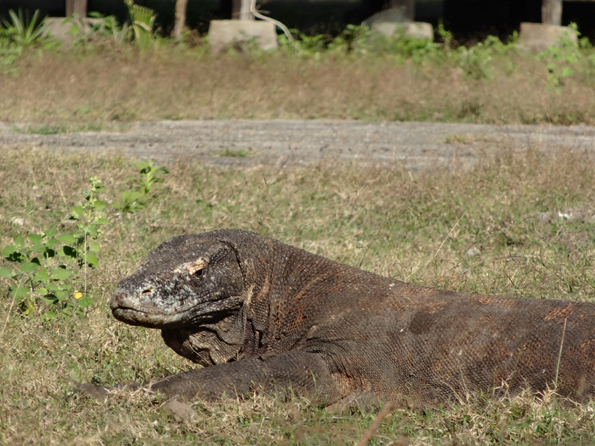
A one and half hour flight found us on the island of Flores – the gateway to the largest and oldest lizard on the planet – the Komodo Dragon.

DSC00242

The dragon is endangered, its population numbering less than 4,000 and increasingly threatened by habitat loss due to tourism and a rapidly increasing human population.

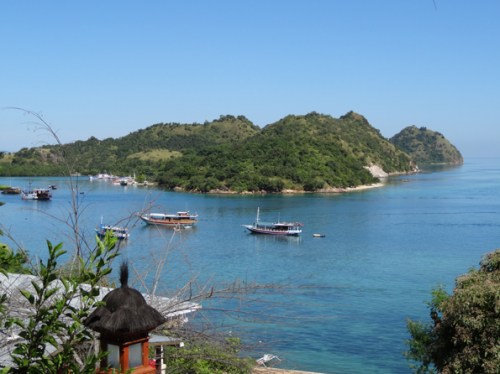
Unaware that we were part of the problem, and keen to catch a glimpse of the mythic creature, we chartered an Indonesian boat and headed for an overnight tour of the islands of Rinca and Komodo.

DSC00260

View nearby Golo Hilltop Hotel

DSC00303

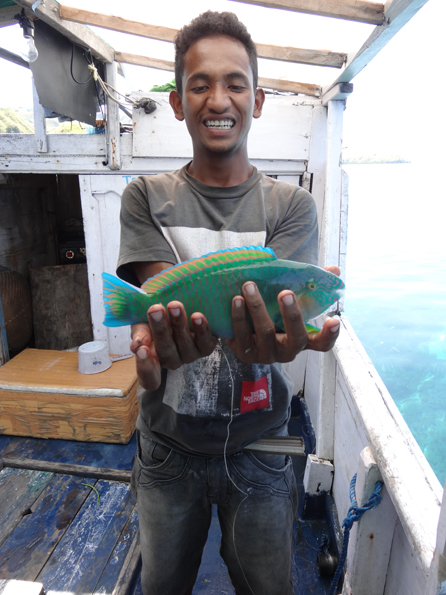
Our first surprise was finding the boat manned by two boys young enough to be in high school.

Captain Ajib, age seventeen…

DSC00476

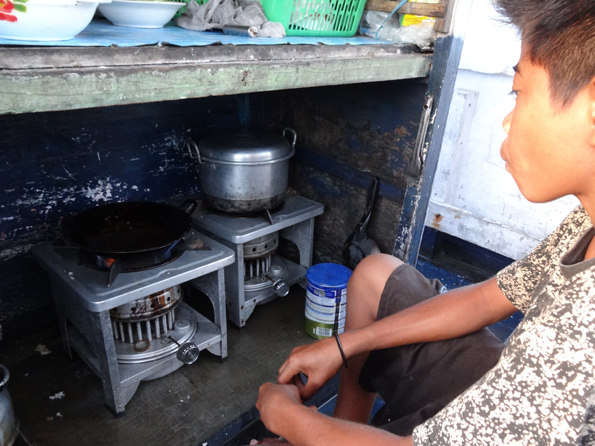
And his First Mate, Parman, age fourteen.

DSC00475

While the rest of us, including our own personal tour guide, Lexy, sat back and – well, sat back – Parman hopped quietly about the boat, forever engaged in some duty or the other.

DSC00473

His most important role was food preparation.

DSC00391

A tasty menu of stir fried noodles, seafood and tempeh, sautéd vegetables, battered eggplant, potato fries, rice and banana pancakes – all came from a kitchen the size of a cupboard.

DSC00529

His skills, picked up from his mother, frankly, put both of us women to shame. I will never again complain about my kitchen.

DSC00394

Thanks to Parman, we had the energy we needed for our ‘moderate’ treks through the tropical jungle and savannah in search of the dragon.

DSC00374

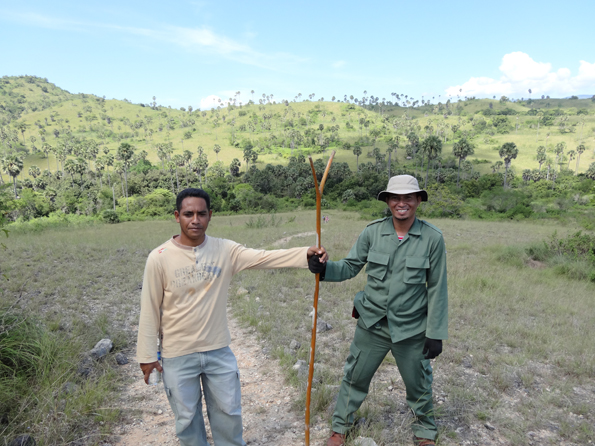
Our tour guide, Lexy, with the National Park Ranger.

We learned the dragon has over 50 types of bacteria in its saliva that will slowly poison the blood supply of anything it bites.

Wild buffalo (as well as the elusive wild boar)…

DSC00360

Deer (as well as dogs, goats and anything smaller).

DSC00442

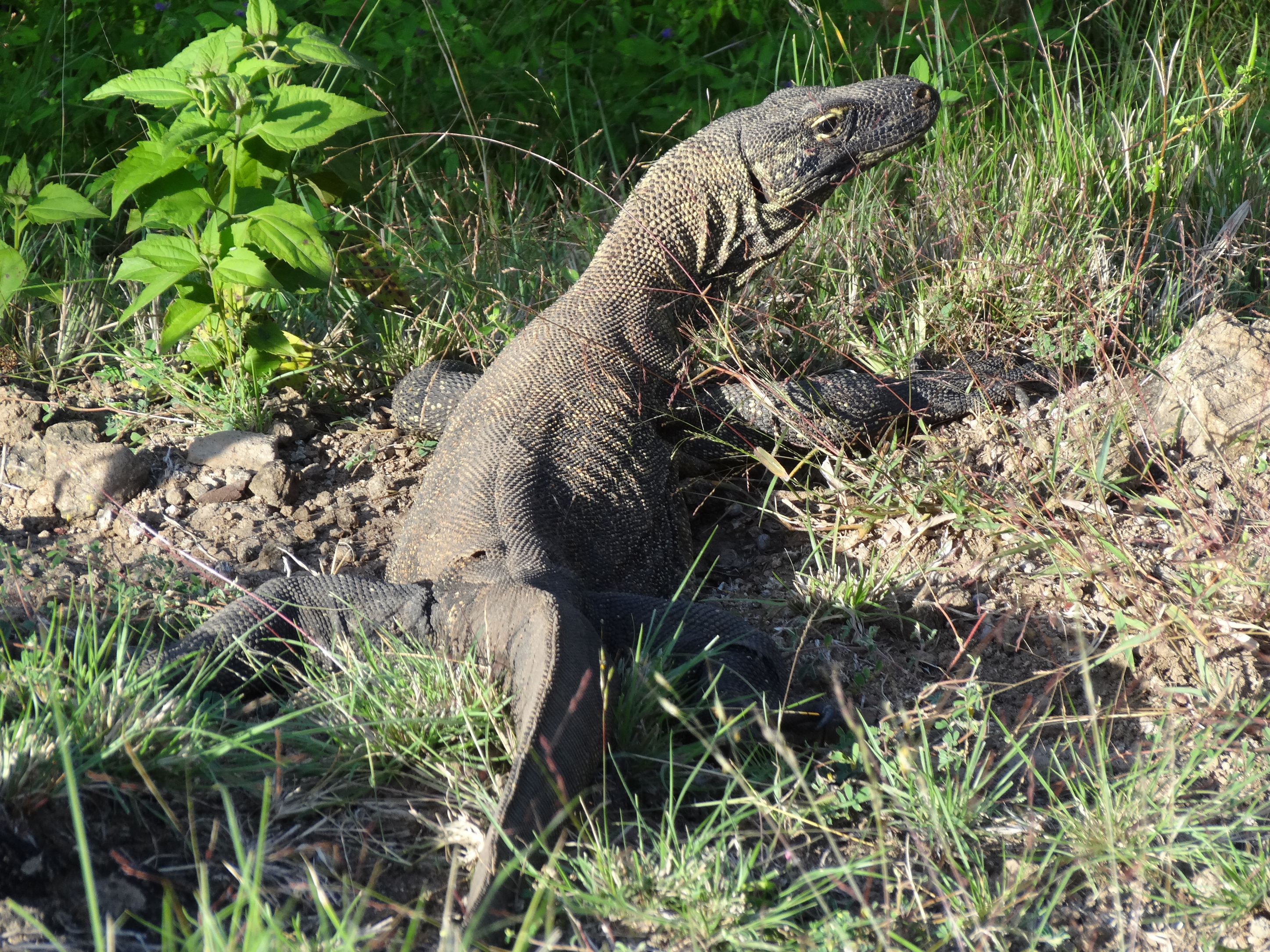
The dragon also eats its own young, who are forced to take refuge in trees from the moment they hatch until about four years old.

DSC00416

This one was about 3 months old.

We saw the whole family of dragons – the frisky teenager…

DSC00439

Tired Mama (yep, another ‘Kodak Moment’)…

DSC00424

Exhibitionist Papa…

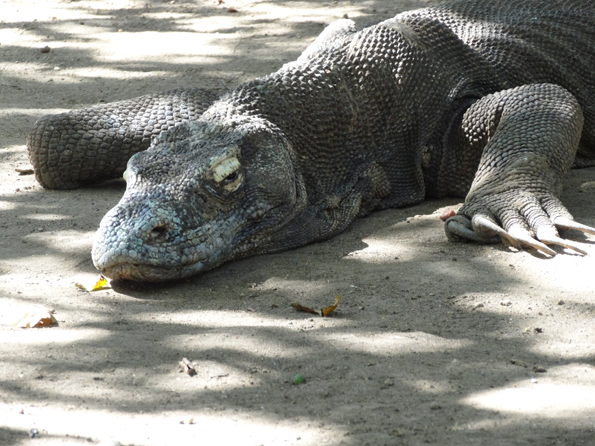
And even the Grumpy Old Grandpa, whose been hanging around camp ever since he broke his leg in a fight with another male dragon.

DSC00357

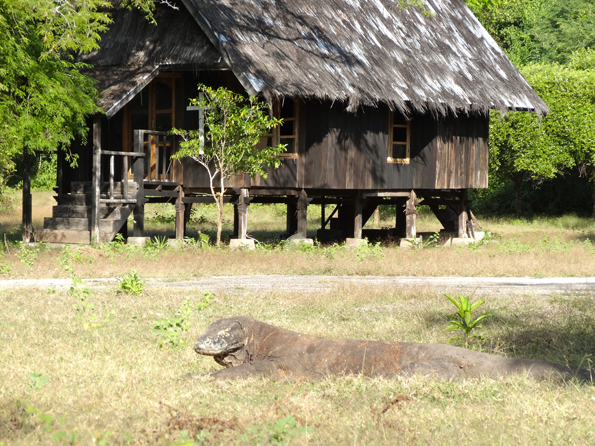
We were told the dragons often come to the camp, because they can smell food. But the connection between the dragons and humans goes way back…

DSC00455

According to local legend, Princess Naga, the spiritual ancestor of the Ata Modo people, once gave birth to twins – a human child and a Komodo Dragon.

For this reason, the local people never kill the dragon, and would traditionally leave a deer or goat on the outskirts of the village, as an offering.

But since the islands became a National Park in 1980, this practice has no longer been allowed.

In 2007, for the first time in 33 years, a local 8 year old boy was killed by a dragon. Attacked on the outskirts of the village.

Then again, in 2009, two dragons mauled to death a fruit picker who fell out of a tree.

I wonder.  What happens when local customs are outlawed? Does the dragon magically forget its god given right to be appeased?

Or is this story symbolic of a wider imbalance between the needs of nature and the needs of humans?

Perhaps there’s no easy answer. But I know one thing – I wouldn’t want to mess with this fella…

DSC00454

Have you ever seen an endangered species in the wild? Do you think they have a right to be appeased?

Kodak Moments

Hi everyone! I am back from my Bali trek, rested and more than a little mind blown.

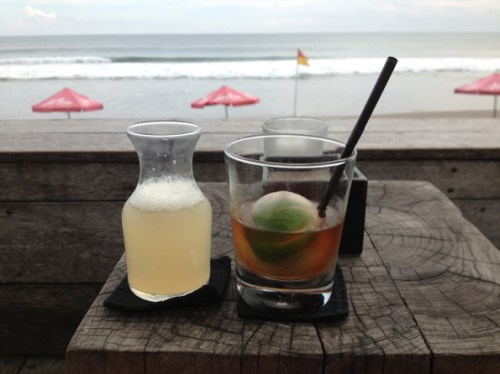
Our travels took us to Kuta and Seminyak – the most popular beachside “villages” where most of the shopping and cocktail sipping takes place.

KuDeTa

Cocktails at Ku De Ta

Much of what I saw made sense when I learned that Bali’s population of 4 million is far eclipsed by the 7 million annual visitors it gets per year. Most of whom are from Australia.

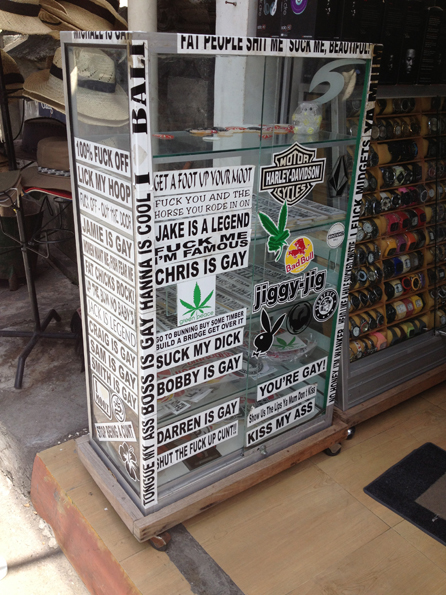
Despite the overwhelming hospitality and warmth of the local people, it was impossible to overlook what they really think about us Aussies – giving pause for more than a little cultural cringe.

IMG_0300

Shopping sights in Seminyak

But leaving the tourism epicentre and heading inland to the arts and culture capital of Ubud, I experienced both the high and low point of my trip.

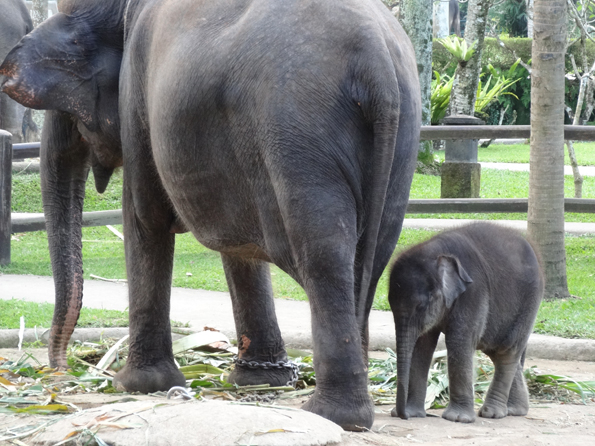
At an Australian operated Elephant Safari Park, we were introduced to a herd of 31 elephants.  Three born in the park, and the rest rescued from Sumatra due to habitat loss from palm oil plantations.

DSC00850

The lodge was its own little oasis – a small tropical jungle with ponds and fountains, a lake and a safari track.  A little Garden of Eden tucked away in the hills of Ubud.

DSC00588

Booked in for three nights, I had high hopes for an elephant hug or two.

On arrival, we were informed a schedule had been drawn up for our stay.  At 6.30pm, an elephant would collect us from our room and take us to dinner and a show.

We would rise for an 8.00am elephant washing, 9.30am safari ride, lunch and another show, and the whole routine would be repeated daily during our stay.

There were many opportunities for ‘Kodak moments’, as the staff insisted on capturing our fumbled attempts to scrub an already clean elephant…

Elephant_washing

If I look like I haven’t had coffee, it’s true!

Our ‘swim’ with the elephant, that consisted of the elephant dunking us in the water, and lurching back up for a photo…

DSC00820

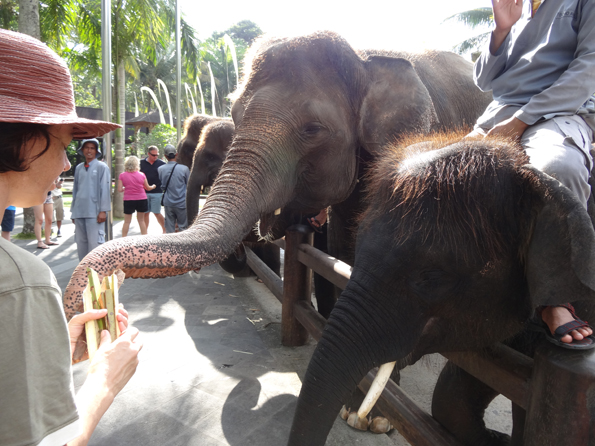
Our hand feeding of hungry elephants, and their on command moments of gratitude. Click. Click.

DSC00712

DSC00722

We learned that the elephant’s day typically starts from 8.00am and ends at 9.00pm.  On a busy day, they can take up to twenty rides around the same thirty-minute circuit – in addition to the rest of their activities.

Sometimes, this means eating on the job.  But on quieter days, they get time out for a feed, tethered to small patch of dirt amidst the park.

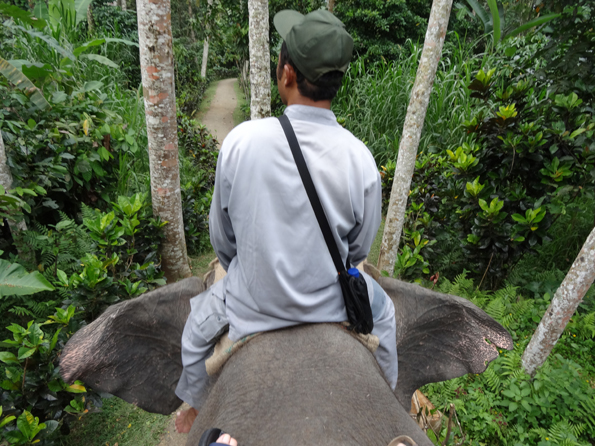
On one of our Safari rides, the elephant suddenly stops on the track.

DSC00596

“She’s tired,” her mahout explains, pressing her ears with his foot to push her forward.

“It’s okay,” we say. “Let her rest.”

Relieved, they both relax. The mahout swivels around on her neck to talk to us as we pause there, in the man made jungle.

We ask how he enjoys his work.

“I love the elephant,” he redirects, politely. “My wife is jealous. She says she is my second wife.”

He explains he came with her from Sumatra, and has worked with her for thirteen years. A job for life.

“There is no training or study you can do
that can teach you how to love the elephant.
You either have it or you don’t.
Some say it is magic. But it isn’t magic.
It just comes from your heart… ”

DSC00577

I’m tearful as the mahout gently encourages her to move on down the track.

When we reach the end of our ride, and disembark, I reach down to pet the elephant’s head.

She sighs, and leans her head and trunk on the platform next to me, hungry for the recognition.  Her eye searches mine, and a tear escapes us both.

“Thank you, you are a very beautiful elephant.” I say. And she lingers there until her mahout gently pushes her to go.

In that moment, I forget to take a photo.

And perhaps that’s just as well.

Do ‘kodak moments’ make you uncomfortable? What’s your favourite kodak moment that you didn’t take?