Welcome to my Rock

This post marks the end of my twelfth week in blogosphere – which means, in job terms, I’ve just passed my probation.  Yay!!!

You’d think by now I’d have some idea what it is I’m doing, but a couple of weeks ago, one question pulled me up short:

Why do you blog?

I’m very thankful to Jenny Hansen for posing this question in her post Does Blogging Jack Up Your Schedule? because (as her blog promises to do) it demanded MORE from me.

In my travels so far, I’ve found almost as many approaches to blogging as there are people in the world.

For some, it’s a means of meeting and keeping in touch with friends, a public form of ‘diary’, or a place to heal and figure out your thoughts.

For others, it’s a highly professional gig.

If you’re like me, you’re here because you finally realized that living under a rock is no longer an option for writers in the 21st century 😦

Until I read Jenny’s post, I thought that was enough – except for the one small problem of it having robbed me of my Quiet.

For example, this is what I actually wrote the week I posted An Island in a Sea of Words:

I was whining explaining to my most important person that I had lost my Quiet.

Helpfully, she told me how I if I don’t learn to Logout.  Shutdown.  Exit the program. I will drive everyone insane.  Including me.  This is not sustainable.  She says.

“But that’s just it.  It’s not like I don’t know that!” I squeal, hands in the air.

“It’s like my brain is fighting with itself.  On one hand it’s like – You have to interact – and the other side is saying – You can’t keep doing this – and then I’m like – But look at all those tweets – and then it’s like – What about your writing? – and them I’m all – You haven’t read their blog posts…And next thing I’m staring at the screen and

…I am Not Responding anymore!”

By this time she is pissing herself laughing at the monster She unleashed…

Clearly, I was in need of help.

In my quest to manage this thing called a ‘Social Media Platform’, I’ve consulted some incredibly generous souls for their advice:

Anne R. Allen is an advocate of Slow Blogging.  For a variety of illuminating reasons, she promotes quality-over-quantity, which for her means blogging once a week or less.

Amber West has a refreshingly principle-over-rule approach.  Her ‘You’ve Got Questions’ series answered a lot of mine, including the big one, Do Writers Need to Blog? and a fantastic overview on Everything Twitter.

Nina Badzin is the go-to-girl for detailed Twitter tips.  This includes how to organize Twitter so you don’t go insane, as well as solid tips on how to avoid driving other people insane.  She also defends those of us with Facebook lurking tendancies! 😉

Pooky shares a succinct and sincere approach to social media.  She reminded me that the point is interaction.  After all, who has time with 5000+ followers, to send a personal tweet notifying you they’ve replied to your comment on their blog?  Well, she did, and for that I am immensely appreciative.

Suzannah Windsor Freeman tops it off with help for burnt-out bloggers.  A fellow lover of small things (including tea cup chi’s and elves), she encourages us newbies to enjoy the benefits of having a small audience.  She doesn’t need to tell me twice…

It became clear to me, from all the good advice, that the question of what to do is best answered if you know why you are doing it.

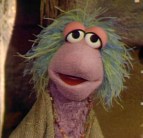
I was reminded of Mokey and her song (at 3:27 mins) from Fraggle Rock:
Sometimes I’m alone,
Sitting on my very own,
Trying to find a simple kind of clue.
And I would like to know
Why the Doozers Bloggers move me so,
Doing all the things that Doozers Bloggers do.
Why do caterpillars crawl?
Why is there a sky?
Why is there a world at all?
Why, do I ask why?

And then the answer came.

Have you ever noticed how animals won’t come near you when you’re noisy?  But sit still long enough and you get to experience a whole other kind of wild?

It’s like that with the Fraggles.  They might run away from Gorgs, but don’t be fooled – they got it goin’ on!

That’s when I realized.

Living under a rock is not the problem.  It’s failing to invite anyone else under it!

So, what can you expect from my cosy little den?

  • For now, a move from weekly to fortnightly wordy thought provoking posts (phew, relief, right?) :).
  • On alternate weeks, shorter posts about fun things Fraggles like to do – cook, chit-chat, send postcards, scamp about, sleep – I don’t know, I’ll make it up as I go along.
  • Until I have a better plan, a less-is-more approach to social media.
  • The space to Go Wild. Quietly.

Hopefully this will make me more congenial to be around for everyone concerned ;).

So – consider yourself officially invited.  And while you’re here, please tell me:

Why do you blog?  Are there any tips you care to share for all us baby bloggers?

Orchid Children and the Power of Quiet

My brother and I were sitting in my living room one day, discussing his little cherub.

By the age of 3, he was already a great conversationalist, and by age 7 had lists of families he wanted to invite for Sunday brunch.  My nephew’s Sundays involve more socialising than I do in a month, and that is to say nothing of his after school activities.

Luckily for him, this child is no introvert, because suddenly my brother blurted out:

“I would hate to have a quiet kid,” he laughs, “Imagine that, sitting there, reading all his little books and doing all his homework – I couldn’t think of anything worse!”

Right at that moment, the chasm between my brother and I couldn’t have been wider.  I mean, he basically just described my entire childhood, so I’m tipping I wasn’t his ideal kind of sis….

Fast forward a couple of years, and imagine my delight when, in the middle of some Amazon research, I click on a cover entitled Quiet: the Power of Introverts in a World that Can’t Stop Talking by Susan Cain.

This may be old news already – it was Amazon’s best book of the month in January this year.  But the book is profound enough for me to want to share it anyway…

All these years, while I was whining about being misunderstood, Susan Cain was going to the trouble of researching and writing an eloquent paper on the plight of us quieter types.

This is not an objective review.  As Hallie Sawyer points out in her post on reviews vs recommendations, that would involve a degree of impartiality when, actually, I’d already decided the book was great based on its cover.  Having now read it, permit me to make a bold recommendation:

Everyone in the ‘Western’ world should read this book.

The stunning thing about it is the clear and intricate story Susan Cain weaves through an array of otherwise complex studies.  It includes:

  • An historical analysis of the “extrovert ideal” in America, revealing ways in which it may have failed introverts and, by extension, their society.
  • A look at the distinction between shyness, sensitivity and introversion, allowing for a wide variance on the introvert/extrovert continuum.
  • A helpful questionnaire for those who don’t know where they sit (if you answered ‘True’ to all questions as I did, you are one of the unlucky ones).

But two chapters stand out for me.

One is her analysis of cultural differences in extroversion.  While trying to avoid fixed lines between East and West, Susan finally explained to me some reasons why I’ve always found myself gravitating towards people of ‘other cultures’.

Apparently, it’s not just about cultural cringe 🙂

More revealing still is the chapter that explores the role of biology and environment in forming temperament.  It highlights profound differences in the way extroverts and introverts process ‘stimuli’.

This means, amazingly enough, there is actual science behind the fact that I’m not into Friday night bar crawls!

The great news is it’s not the end of the world for those of us born with more ‘reactive’ or ‘introverted’ temperaments.

We are “more like orchids: they wilt easily, but under the right conditions can grow strong and magnificent”.

The place Susan arrives at is a beautiful balance between nature and nurture – and a highly empowering statement.

For me personally, it is all the more empowering for the way that we are left with the feeling that being a little quieter, or slower, or less social than others is not a crime.  In fact, we’re needed just the way we are.

Yes, Susan Cain is critical of a cultural imbalance towards extroversion.  But she’s not the enemy of extroverts (and nor am I, in case you’re wondering).  We simply would not survive without the buzz of our near and dearest extroverts.

And therein lies the key to the power of this book.  What we are left with is a refreshing guide for harmonious relationships, making clear the onus is on both us ‘types’ to make it work.

Thankfully, this also includes tips for parents with my brother’s ‘worst nightmare’ type of child.  So should Karma ever bring him an orchid child, instead of just smiling smugly, I can at least buy him a copy of Susan Cain’s book 😉

For those of you who are – or know – an orchid child, maybe this resonates?  Feel free to share some stories, or tips on how to help them bloom…

The Master Painter’s Canvas

A few weeks back I was introduced to the poetry of Vincent Edward Manda.  I’ve really enjoyed conversing with him and reading his poems, and was particularly inspired by his work The Painter of the World.

This post is in appreciation of his verse, and the question posed within.  It goes along the lines of, if the world were a painting, doesn’t the art say something of the Master Painter, too?

I’m not much of an artist, but I know enough to know that ‘perfection’ is a blend of darks and lights…

Others also ponder on this theme.  Whether it is the thoughtful philosophy of Global Unison, or the gorgeous travel log In Search of Perfect – there seems to be consensus that perfection and imperfection are closely intertwined.

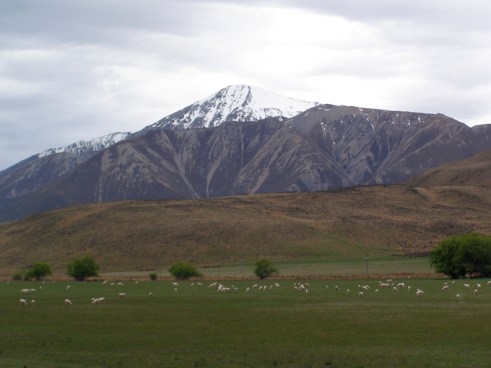
So, inspired by these three, I thought it was time to take you to another holiday destination, this time New Zealand’s south island.

I was very lucky to visit before the recent earthquakes.   It was my first and (so far) only overseas trip.  I really did believe the ads that promised ‘100% Pure’….

The oil painting that is the Akaroa habour

Fiery remnants of a newly formed earth (Barry’s Bay near Akaroa)

Christchurch to Greymouth by Overlander rail

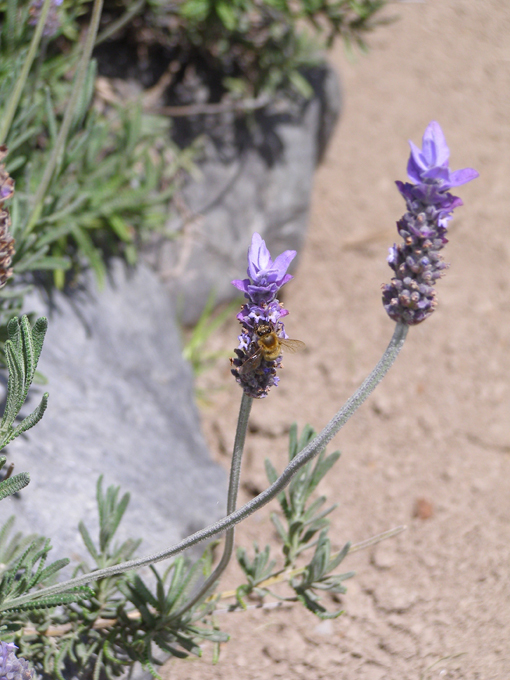
Beautifully manicured Lavendyl Lavendar Farm near Kaikoura

Chilled out seal colonies (Kaikoura)

Marine sanctuaries for the planet’s rarest dolphin (Akaroa)

Lyttelton historic town and habour


New Zealand is such a land of contrast; of exquisite highs and devastating lows.  It hardly seems fair that since this trip, Lyttelton found itself the epicentre of the 2011 earthquake, while Akaroa was all but left untouched.

Here in Melbourne, this is worth a pause.  We recently felt the tremors of a 5.3 magnitude quake.  Except for a few Twitter updates, most of us barely noticed…

I love the line from Sonny, in the movie, The Best Exotic Marigold Hotel:

“Everything will be all right in the end.  So if it’s not all right, then it is not yet the end.”

So, too, with Lyttelton.  In the wake of the trauma, the historic town boasts a renewed sense of community, focused on creating a sustainable future.

I don’t know about you, but I’m glad there’s still room on the Master Painter’s canvas…

Dogs, Children and Toy Envy

This topic was prompted by the angry outburst of a young woman who declared she was not that different to the dogs she trains.  I was impressed by the passion of her statement; one that some would consider an insult to their own intelligence.

It’s a question I am usually hesitant to voice on account of my family’s screw-faced disdain for four-legged things.  But since blogging has given me an emboldened sense of self-confidence, I thought I’d ask it here.

How different, really, are dogs from us?  Can they legitimately be called a child substitute?

A couple of years ago I happened upon a documentary that gave me all the ammunition I would ever need in defending my pooch spoiling ways.

On account of the incredible smarts of a dog in Austria, The Secret Life of the Dog puts a canine’s intellectual capacity on par with a child aged two or three.

This was proven, not only by the undeniable size of the dog’s vocabulary, but by it’s remarkable skills of toy recognition.  (It’s amazing what a bit of positive reinforcement can do.)

While the skeptics among us are busy squabbling over the science, let me just say I’ve personally witnessed two types of sentient being in no doubt whatsoever of the validity of this claim.

You guessed it.  Dogs and children.

The Christmas before Pepi’s brain broke, we went camping.  Best Christmas ever.

Next to us was a cute family of four, also trying to escape their relatives.

On Christmas afternoon, the little four year old girl wandered over for a bit of Christmas present show and tell.  The books went by without a whimper.  But then she made the mistake of bringing out the sparkling unicorn.

It might have been bigger than Pepi, but as far as he was concerned, that toy was, “Mine, all mine!”

The more she snatched it out of reach, the more incensed he became until, alas, poor Pepi had to be locked away in the tent and reprimanded.

Upon my return, her pronouncement that Pepi was a “naughty boy!” was disproportionate to the size and status of a little scrap of dog.  It smacked, just a tad, of triumph over rival.

Then there was the time my Neephs came to visit.

“He’s got soooooo many toys!” declared my three year old niece, and then the kids closed in and counted…one…two…three…SIX toys!

“Such a nice big bed!!” she squealed.  “I wish I had a bed like that!”

She would have climbed in with him, were it not for the self-protective yelp that Pepi gave.  The yelp of one’s belongings under siege.

To everyone’s credit, most of the kids I know are very good with Pepi – and likewise, he with them.  But there is something about the way they interact.

Some illuminating, though slightly worrying experiments on foxes in Siberia, show the way we have bred dogs to be frozen at an infantile stage of life.

Were it not for this, our dear little pups would be far more aggressive, cynical and, funnily enough, a lot less cute looking.

Which brings me to the conclusion of this little tale.

There are two resounding complaints I hear from a different brand of silver fox:

(1) That they don’t see their grown-up children enough.

(2) That their children didn’t turn out quite the way they hoped they would.

So here we have it, the real reason why people have dogs:

They never grow up or leave home.  They rarely disappoint.  And most of all, they love us cutely and unquestioningly for their entire life 🙂

It makes me wonder if this is also an unconscious reason behind the cosseting or curtailing of our teens.  Who is it that really isn’t ready to let go?

Of course, Dr Peter Rowley-Conwy also raises the question of parasitic relationships, but I think I’ll quit while I’m ahead.

The moral of the story is, who could ask for a better child substitute? In the words of Dr Morten Kringelbach “What we get in return is probably sometimes much greater than what we put in”.

Do you have a similar story to tell about children and dogs? Or is this just anthropomorphism dressed in expert clothing? Please do share…

Women, Anger and Blogging

In the last few weeks, I’ve been thrilled and surprised to meet some incredibly articulate young women in the blogosphere.

When I stumbled onto the not-so-rambly Ramblings of the Insane Girl, it was the brutal honesty of her post about being Allergic to Home  that propelled me to hit ‘Follow’.  At last, there was someone game enough to admit their family was dysfunctional!  It took me right back to 1992…

I was, as usual, hidden away in my room, brooding on the inevitability of changing schools for the third time since Year 7.

Dad, of course, was refusing to send me to boarding school in Melbourne on account of it having corrupted my sister.  I, in opposition, was enacting a cold war.

Three weeks before the term began, when still no decision had been made, Dad suddenly entered my room and offered – as if it was his idea all along – to send me off to Melbourne.

Freedom was never so sweet as the day when, age 15, I won my independence.

It took us another eighteen years to actually discuss what happened after that, but hey – at least we’ve called a truce!

When I discovered the self-proclaimed Pessimistic Optimizer, it was honesty of a different kind that had me hooked.  I gather, from her posts, she is past the college age.  But I love the way she is able to reconnect me with that naïve, wannabe teacher’s pet, whose ultimate goal was to be a goodly shining light.

Problem was, like her, I ended up far too pessimistic  for my own good.  As she says, “How could I not be?  Have you seen the world we live in?”

When I left the safe cocoon of my sheltered private school life and entered the real world of corporate blood lust, my brain nearly exploded.

How could everyone be so mean and sleazy and downright greedy?

The worst thing that can happen to a Taurean goody-two-shoes, at the age of 22, is being told you are just “young and idealistic”.  Needless to say, what ensued was what my Mother affectionately refers to as “another one of Alarna’s little bombshells”.

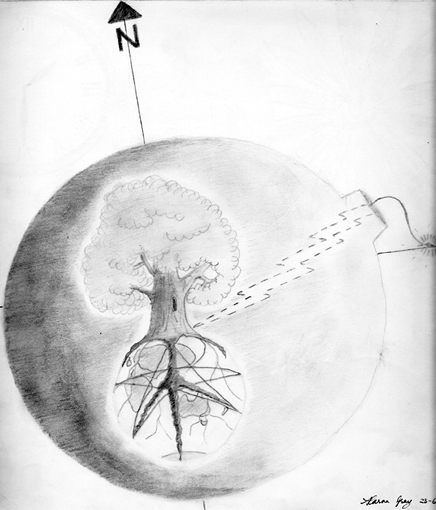
My dubious art from Year 10

That was when I discovered the fine line between bravery and stupidity.

But that’s another story 🙂

It is possible, for these reasons, I was drawn to read The Musings of a Pirate.  They came in the form of a Personal Rant filed under ‘Socially Deprived’ (Disclaimer: this post contains coarse language). “Don’t waste your time with this”, she said.  So, of course, I did.  And it most definitely was NOT a waste.

Whiney, selfish, righteous rants don’t interest me.  But this is different.  It is full of energy, passion and highly motivated, female ANGER.  Anger at restraint.  At the way in which boys are encouraged to achieve, while girls are deemed “not ready”.  At the way an angry girl is mocked.

If anyone has ever wondered what goes on in the mind of their angry young women, this is a must read.  What I love is the constructive note of the anger, borne out of a desire to “ACHIEVE something in this world”.

Anger in women is a much maligned emotion.  Just compare a Google search on ‘Angry Young Man’ to ‘Angry Young Woman’.  One has a Wikipedia page and is clearly expected.  The other is a problem to be understood.

But history is full of highly effective angry young women.  Check out Colin Falcolner’s informative posts on Princess Pingyang, Mary Shelley and Isabella, Braveheart of France – to name a few.

The signs are there that the new millennium is calling for young women to be a force for change.  Take Buffy or Brave or Britain’s new generation of young, angry, female playwrights, for instance.  Then there’s will.i.am’s Science Technology Engineering and Mathematics (STEM) advocacy, aimed at encouraging girls from the ghetto to be the leaders of tomorrow, (see the Graham Norton interview, 11:20 minutes in).

The question is how we harness the rage into a creative, rather than destructive, force.  Here, I think The Pirate might have given us a clue:

“I’m not that much different than the dogs I train and I just want to know I’m on the right track, at least a little. You’d suck as a dog trainer. You don’t have any clear objective, you’re light with your praise and heavy on your criticism. That’s what good dog trainers realize traumatizes a dog.”

Next week I promise to discuss the concept of dog parenting.  But for now, I think what she is saying is, all we need is a little positive reinforcement 🙂

I love that these days a blogosphere exists, where women can and do support each other.  Thanks to these young women, I’ve been reconnected with the passion of my youth.  Together, maybe there’s a chance that we can keep the flame alive…

A Fairytale for Grown-ups

I’m so excited this week I don’t know where to start.  But it feels like there’s a buzz in the air – is this just me?

Earlier this week I read a post, again by The Man of the Minivan, which detailed a funny – but much more cynical view – of kids’ stories than the one I’m about to tell.  How a child’s book, read through an adult’s eyes, suddenly becomes a story about…politics?

Personally, I love the way that kids’ stories are able to whittle down the complex issues to their barest, human bones.

And that is exactly what this modern fairy tale does.  Just don’t expect a fluffy ride – it’s called Brave for a reason, right? 🙂

It is the perfect answer to my quandary last week, when I stumbled upon a Grimm tale about fear and bravery.  I’ll try not to include too many spoilers.

Merida is the gorgeous, spirited Princess from the Scottish ruling clan of four.  Presented with a bow and arrow for her birthday as a child, she grows into a fiery teen who breaks all rules of Princessly decorum.  What’s a girl to do when she’s the apple of her father’s burly eye?

The clincher comes when Merida learns of her planned betrothal to the winner of the Highland Games, where the three eldest sons of the other clans compete to win her hand.

From here, the story unfolds as a battle of wills between mother and daughter, duty and independence, tradition and progress.  And it’s one selfish little tantrum that she throws!

It might be hard to believe that a Princess of that time would be quite so rebellious.  But we are talking fiction, here, and the joy is living vicariously through characters much braver and more selfish than we could hope to be.  (Plus, one only has to take a look at the husbands-to-be to take that ride!)

Merida’s rebellion takes a dark turn involving a will-o’-the-wisp, a wicked witch and a (quite literal) return to the wild.  The only way through is the hardest of all – to mend that familial rift.

There’s lots of little fun things along the way – like her impish triplet brothers whom she bribes to do her will.  The warm, loving and otherwise clueless men of the clan who are too busy fighting and drinking to know what’s going on.  The buxom maid.  The rest – you’ll have to watch to see.

I love this movie.  It is PG rated, but it’s not for the faint hearted.  So beware of your grown-up sensitivities and if you’re scared of your child’s emancipation, maybe stick with Cinderalla 🙂

If not, you could learn a thing or two.

Bravery is a balance.  While it can call for might, it sometimes also requires a more humble kind of resoluteness.  It is the hardest thing in the world to do, because it means negotiation and a compromise.

The happily ever after is suspended for a much more grown-up take on hope.  And what I really dig is that neither Merida nor her mother come out of this unchanged.

In the end, they learn from each other.  The child teaches her mother the value of breaking tradition, and the daughter learns the value of the legends that have gone before.  The solution – surprise, surprise – benefits the entire kingdom somewhere along the lines of ‘make love, not war’.

In a world of uncertainty, where tradition seems somehow to fail us, it gives us hope.

As Merida says:

“Legends teach us things.  But we are young.  Our stories haven’t yet been told…”

There are lots of political lessons to be taken away from this, too, if you want to go there.  For example, the fact that the lead character is a red head caught in a political crossfire (anyone seen our PM lately?) is not lost on me.  But that’s a whole other sad story.

They might be the rarest of them all, but I think it’s fair to say, in this instance, the reds have it.

Have you seen the movie?  What are your thoughts?  Is it just another kids’ story, or are there worthy lessons to be learned?

Adults are Supposed to be Brave

If you’re lucky enough to be one of the significant adults in a child’s life, you’ve probably already discovered that your role is not exactly what you think it is.

A few months ago, I spent a day on the beach with my sister’s three kids – my Neephs.

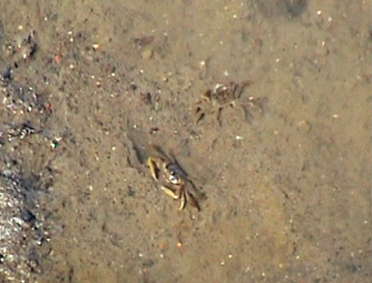
After some time, my nephew had finally spotted a crab, and was busy explaining how I should pick it up.

“Why don’t you pick it up?” I enquire, hoping to be off the hook.

“’Cause I’m scared to,” says the little D.

“Well, then, so am I,” I say.

“But Aunty Nana, adults are supposed to be brave!”

It was a priceless opportunity, I thought, to give him a lesson in how adults aren’t always brave.

But we were there with his father, that day, and it wasn’t long before he was plucking some poor creature from the shallows and little D was giving me that look.

Great, I think, now I’ve just given him a lesson in how girls aren’t always brave!

Until that moment, it never occurred to me that our relationship was in the least bit gendered.  We were just people, fellow introverts, sharing a common fear of humans and other things that bite.

Clearly, I wasn’t the best person to be teaching him lessons about bravery 🙂

But it did lead me to question how we teach kids things.

The lesson, in fact, probably had nothing at all to do with bravery, and more to do with respecting natural boundaries.  A lesson in ‘live and let live’.  In co-existing with other creatures.

It would have been a simple lesson for a boy whose first response to others’ touch is often “Go away!”

All I had to say was “How do you think the crab would feel?” and he’d have gotten the point of empathy and kindness.

But even then, once Daddy came along to show him how it’s done, I suppose the lesson would have been that empathy and kindness is for girls. Grrrr.

Where did it all go wrong?

It used to be that Fairy Tales were the source of all things wise, where communities passed down lessons to their kids on how to coexist.

So I consulted with the Brothers Grimm, and it turns out, a little bit of healthy fear is not so bad!

Photo by samlevan courtesy stock.xchng

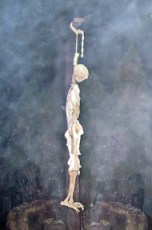
In “The Story of the Youth Who Went Forth to Learn What Fear Was”, it seems the whole village knows what it is to shudder, except for one boy.  His inability to fear is a source of great shame, and eventually, he is cast out of home.  In his mission to learn how to shudder, he encounters seven swinging corpses, and a haunted castle filled with creatures of the night, his cousin’s corpse, a beggar and some body parts.

Not knowing how to fear, he starts off being kind to all the ghoulies.  The best is when he tries to warm his cousin’s corpse.  Instead of being grateful, the cousin turns into a zombie and tries to strangle him – to which the youth retaliates in kind!

Instead of learning how to fear, the youth learns how to fight.  In the end, his ruthlessness wins him a Princess and a place in the kingdom.  It is finally up to his new wife to teach him how to shudder, which she does by throwing a bucket of cold water on him in the night.  Cold shower, anyone?

The moral of the story, according to moi, is that communal life requires the skill of knowing just a little how to fear, and of respecting your place in the scheme of things.  What’s scary is that progress, in the world outside the home, seems to depend on a foolish and callous bravado.

Photo by Karen Barefoot courtesy stock.xchng

Is this the kind of brave we want our little ones to be? I can’t help wondering what will happen when little D no longer feels okay to admit that he’s afraid.

I’m not sure what the answer is, but I’m looking forward to next week, when Brave hits our cinemas here in Oz.  Tune in then for my take on a modern tale!

In the meantime, I’m curious to know your thoughts.  Can bravery go too far? Should boys be braver than girls? How do we teach our kids empathy without making them weak?

An Island in a Sea of Words

After five weeks of blogging, I have a guilty confession to make.  I love when I find a blog where stories are told in pictures.  No words necessary.

When I stumbled upon Gabbies Island, the whole idea tickled me.  An Island, in a sea of words, and in the midst of it, Wordless Wednesday, where a photo says it all.   Thanks, Gabbie (some pretty cute pics there, too) 🙂

This is not to diminish all the faithful writers out there.  It’s just that – sometimes, we need to take a breath.

So, this week, I thought I would take you for a visit to my own special Isle of Quiet.

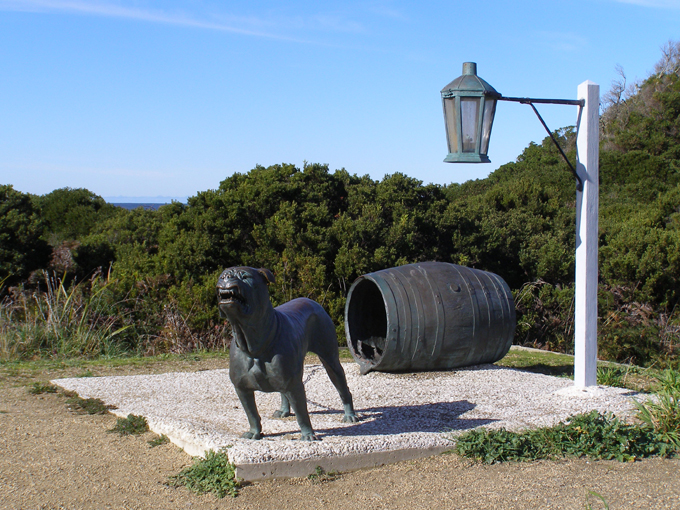
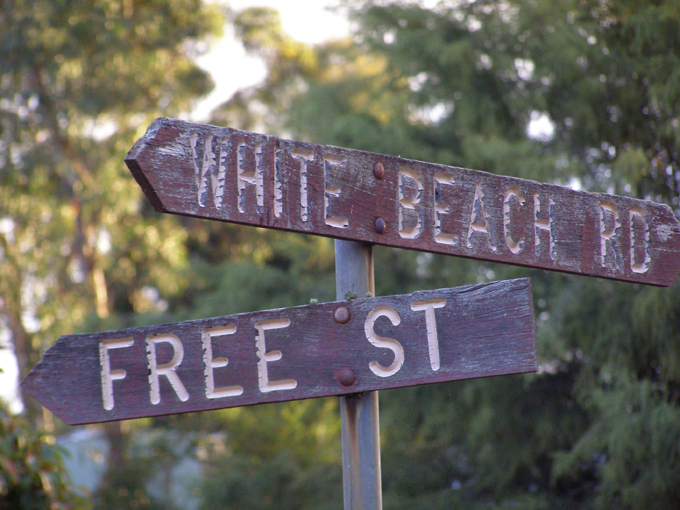
This was a couple of years ago, when I went with my folks on a ten day trip to the East Coast of Tasmania.

Approaching Port Arthur Peninsula.

 A place of grim convict stories…

Little House on the Prairie.

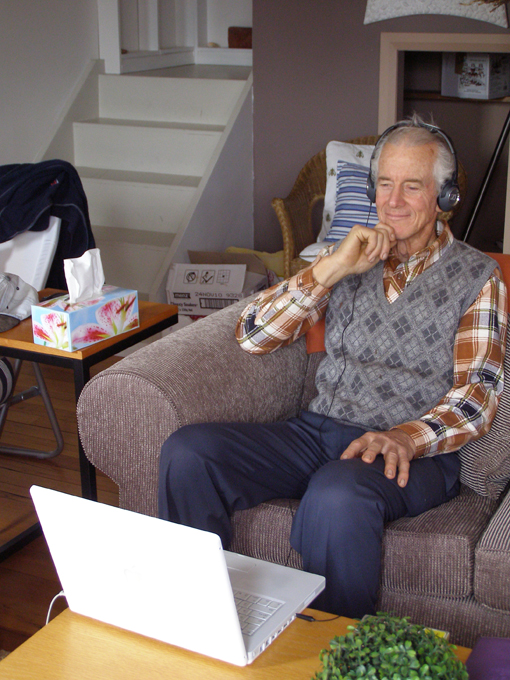
I mean – literally.  This is Dad – watching the DVD on my laptop!

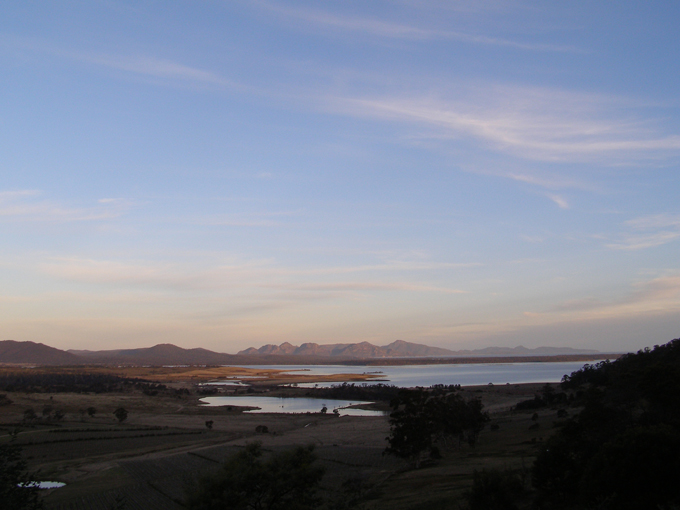
Approaching Coles Bay.

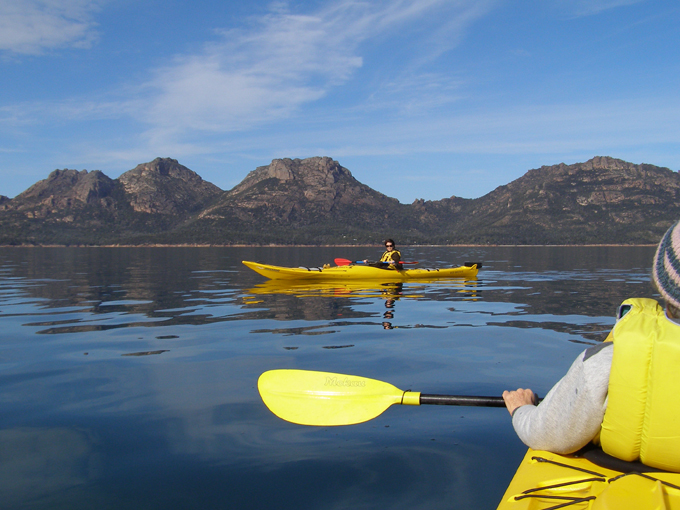
No words necessary…

Some local wildlife…

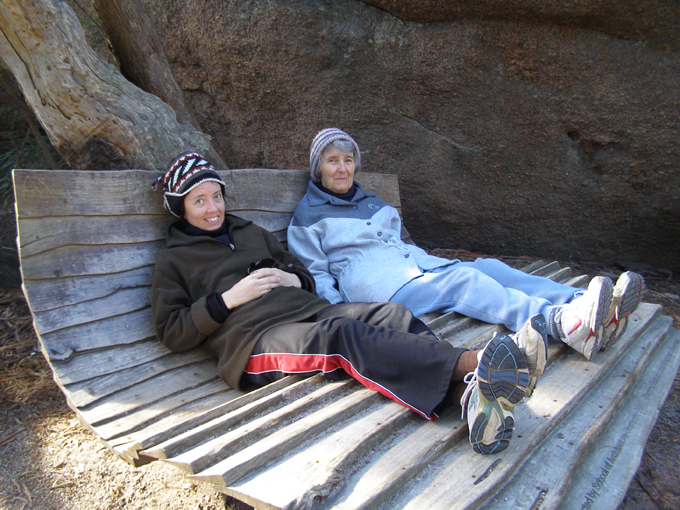
(no family resemblance whatsoever)

A place to find the Quiet.

Where do you go to find the Quiet?  Is it a special place, or something more abstract?  Please share with us 🙂

Finding the Path to Peace

This week I’ve met some beautiful people, all of who – in their own way – are grappling with the question of time, regret, living in the moment.  I’m touched by their journeys, especially The Mezz and The Nomad, who echo some of mine.

It’s like we’re always fighting with ourselves, wondering why, in the two or twenty years that passed, we are still here.  But lessons in acceptance sometimes come from the most unlikely places.

Pepi was never one to live outside the moment.  Up until he was fifteen, both he and I were fully convinced of his invincibility.  In this Alter fantasy, he was Bolt, and I his helpless human sidekick.

(See – that’s me in the background – just trying to keep up!)

There was a time when fifty throws of the ball in the park was puppy’s play for him.  He’d bolt on and off the bed, the couch, the front porch step at something close to warp – and if you dared to squeak that squeaky toy…

The only time he sat still was when I ate, and then there were those eyes…

Slowly as his superpowers waned, there always seemed to be a good excuse.

When he lost sight of the ball it was…Aw, well, he does have cataracts.

When he grabbed the ball and ran for home at throw number eight…It must be his arthritis.

When he left a puddle on the kitchen floor…well, that one was harder to excuse.

The day his brain broke we were not prepared.

I had taken him with me for a dinner visit.  Pepi had paced the unfamiliar house the whole night until we left.  It must be he’s excited, I thought.

When we got home he was hyper.  He tried to jump up on the couch, but missed and hit his head.  And then, before my eyes, it all unraveled.

His back legs went limp.  His eyes rolled wild.  He tried to walk and kept on banging into things.

We were both shrieking – he from terror, and me in a futile attempt to stop him injuring himself.  It was like he’d had a stroke.

When we went to see the vet, I didn’t expect them to tell me the only thing they could prescribe was rest.

Idiopathic Vestibular Disease is an alarming, sudden onset loss of balance in older dogs with no known cause.  Though the symptoms can be indicative of other underlying issues, such as brain tumors, luckily for Pepi, this was not the case.  Remarkably, his symptoms mostly subsided after three full days of rest.

But he never has been quite the same.

It was like that moment when Bolt realized it was all a scam.  He never did have superpowers.  It was just an elaborate story people told him so they could entertain themselves.

Any wonder that depression, dementia and hand feeding followed.

Until that point, I had probably spent most of his adult life wishing he would calm the F down.  Now I wished he would just be the way he was before.

I could have put us both out of our misery then, but hadn’t his whole life been working its way to this point?

How could I deny him the part where’s he earned his right to be a pampered pooch?

He’s not the same dog, it’s true.  He’s a Superdog that just retired.

He rarely speaks these days.  He knows his limits.  Sometimes he forgets things.

One day recently he was left home alone for an unusually long time.  When I got back, he was fed.  We played a little game with squeaky toy.  He ate his chew.  After that, he went to sleep in front of the TV, as he likes to do.

Half way through The Good Wife, he woke up with a start.  I caught him staring at me like he’d seen a ghost.  It was clear he couldn’t remember me coming home.  Or the game.  Or being fed.  Or the chew.  He wanted the whole thing, all over again.

I could have said no, but he would have gone to bed all angry.

So I gave him supper, and he slept.  So happily.

The passing of time into old age seems like a cruel joke – but only if we fight it.  Now that we’ve accepted his mortality, it’s a whole new world of discovery on the path to peace.

Have you ever been confronted with the unexpected passing of time?  How have you coped?  If you’ve written or read a post about it, feel free to leave a link in the comments so we can share…

Unleashing Your Inner Rock Chick

Australia is obsessed with The Voice at the moment, even though I think most of us were ‘no way gonna watch another damn reality talent show’.  I know it wasn’t just me – singer-songwriter Kate Miller-Heidke summed it all up in her send up of Australian Idol, ‘Career Advice‘.

Anyway, the first replay of the first episode caught me off guard, on account of the fact that the judges didn’t get to see the contestants.  Of course, that would appeal to me – it’s kind of like the difference between blogging and pitching for writers 🙂

The stand out is Karise Eden, who has the voice of a 40-something at the age of 19, complete with a hard-luck story to melt the most cynical of hearts.  As Seal, one of the judges, put it: “Your 50% is like everyone else’s 80%”.  All I can say is – she better win.

For me, singing is probably the highest form of art – especially singer-songwriting.  It is that sublime meld between writing and performance that gets me every time.

I was trying to explain to my brother on the phone one day how I would have liked to be a singer in an alternate universe.

“Oh yeah,” he said, “I know who you would’ve been – who’s that chick who sings and plays the piano…that’s right, Norah Jones.”

Now – nothing against Norah Jones – I have full respect for her musical talent.  But, bro, did you miss the four years of my life when I was whining about how much I hated piano lessons?

I was going for alternate universe…the kind us introverts can only fantasize about (yes, I’m talking to you…don’t think I haven’t seen you lurking here…).

I went searching for an example of who my Ultimate Alternate would be.  I typed in to Google:  Sexy Rock Chick.

Apart from all the porn sites that came up, there were a few results:

Pink.

Hmmm, maybe before she was a pop star.

Gwen Stefani.

Love her stuff, but way too blonde.

Joan Jett.

Not my era.  I mean – mullet, people, Mullet!

There were a whole bunch of others, but none seemed to fit the bill.

Then I remembered a movie I had randomly watched back in the 90’s, when I was living alone with Pepi, huddled in front of the bar heater…

Bandits, a German movie about a prison girl band whose members escape jail and somehow manage to make it on the world stage.

That’s it!  I thought.  But when I found the video, it was so NOT what I had in mind at all.  It was like Eurovision’s idea of bad chicks…way too clean.

I was coming up with nothing, and then I realized my Ultimate Alternate was not a singer at all.  Aww, but imagine if she WAS one?!

Lisbeth Salander in The Girl with the Dragon Tattoo

It was so perfect.  I mean, she’s an introvert, who totally kicks ass, who – in an Alternate Universe (I’m pretty sure) – really would be a Sexy Rock Chick!

If you ask me, the whole Alternate fantasy is all about control.  And the desire to either have it, let go of it, or – better still – have BOTH at once!

I’ve only ever raised my voice at someone twice.  Both times involved copious amounts of alcohol.  And the words all came out slurred, which sort of defeated the purpose.

So, given that I can’t be a Lisbeth Salander SRC, I’m forced to resort to blogging…sigh…But, actually, I’m having a blast 🙂

The great thing about a good Alternate is that they connect us with that inner source of who we are.  The tricky part is how to get it out there.

It’s like Seal said – “You already have The Voice – it’s a question of what you’re going to do with it”.

So I’m dying to know.  Who’s your Alternate?  How do you unleash it in the here and now?